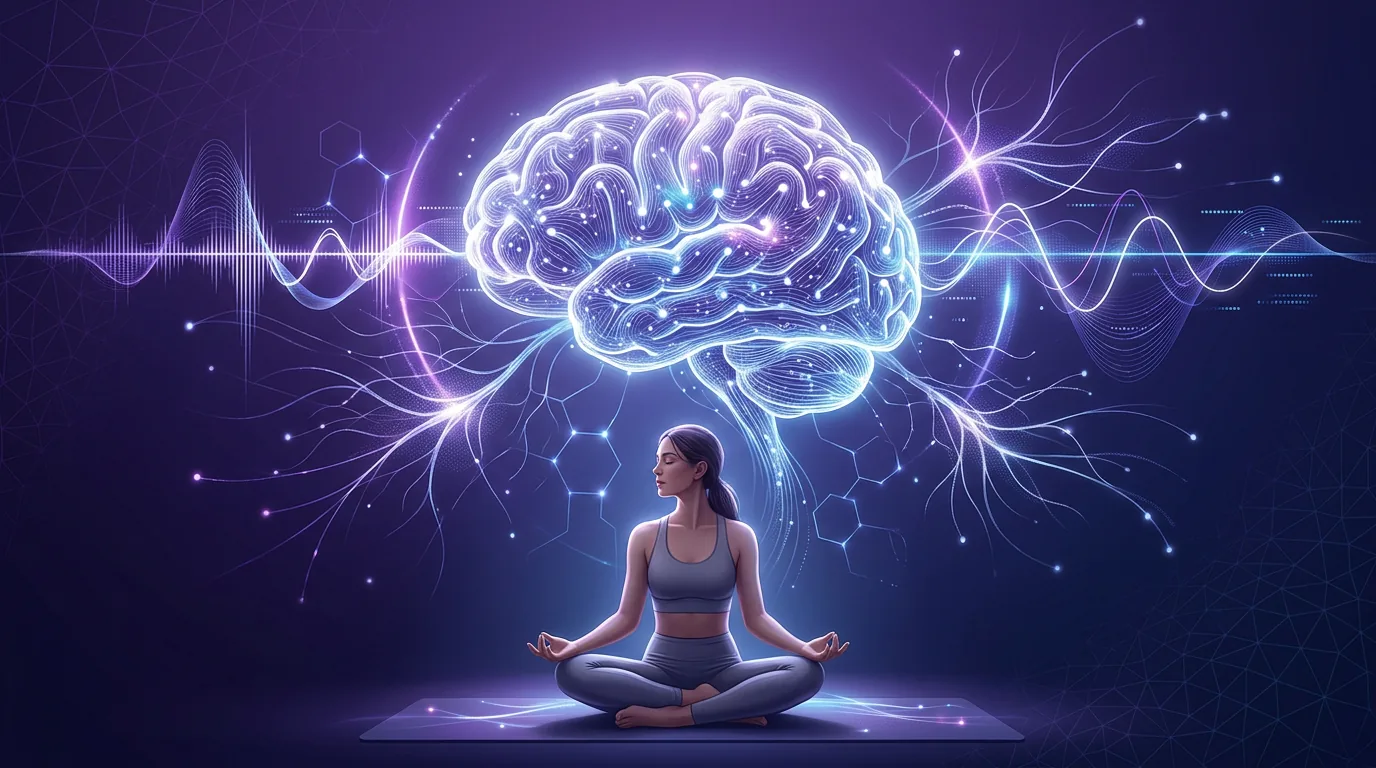
Research shows that meditation starts working faster than most people expect. Measurable reductions in stress and anxiety appear after just four days of brief practice, according to a study by Zeidan et al. (2010) published in Consciousness and Cognition. Within eight weeks, MRI scans reveal structural changes in brain regions associated with memory, empathy, and stress regulation, as demonstrated by Lazar et al. (2005) in NeuroReport and confirmed by multiple MBSR studies.
The short answer to how long to meditate for results: you will likely notice something within your first week, and the science confirms measurable neurological changes within two months. But the full meditation results timeline is more nuanced than a single number — and understanding it can help you set realistic expectations, stay consistent, and get the most from your practice.
This guide breaks down exactly what the research says happens at each stage, how many minutes to meditate for optimal results, and why personalized practice can accelerate your progress.
Key Takeaways
- Meditation produces measurable stress reduction after just four days of 20-minute sessions (Zeidan et al., 2010)
- Structural brain changes appear in as little as eight weeks, including increased gray matter density in the hippocampus (Lazar et al., 2005; Hölzel et al., 2011)
- Consistency matters more than session length — ten minutes daily outperforms sporadic 45-minute sessions
- The meditation progress timeline varies by individual, but every stage of practice produces real, documented benefits
- AI-personalized meditation can accelerate results by matching techniques to your specific needs — MediTailor adapts every session based on your progress
The Science-Backed Meditation Results Timeline
When does meditation start working? The evidence points to a clear progression. Each phase builds on the previous one, with benefits compounding over time.
Here is the complete meditation results timeline based on published peer-reviewed research.
Days 1–3: Immediate Stress Relief
You do not need weeks of practice to feel something. The first few meditation sessions produce real physiological changes:
- Heart rate slows
- Breathing deepens
- Cortisol levels begin to drop during the session itself
A study by Zeidan et al. (2010) found that participants with no prior meditation experience showed significant improvements in mood and reductions in anxiety after just three days of brief mindfulness training. These effects were not placebo — they were measured against active control groups who listened to audiobooks for the same duration.
What to Expect in the First Few Days
Lower acute stress, a sense of calm after sessions, and improved ability to fall asleep on the nights you practice. These early benefits are temporary and session-dependent, meaning they fade between sessions. But they provide immediate reinforcement that the practice is doing something real.
If you are new to the practice, our guide on meditation for beginners covers how to get started with your first sessions.
Week 1: Mood and Emotional Regulation Improvements
By the end of your first week of daily meditation, emotional changes become more noticeable. Research published in Psychosomatic Medicine (Creswell et al., 2014) found that even short-duration mindfulness training produced reductions in inflammatory biomarkers and self-reported stress after five days.
At this stage, many practitioners report:
- Feeling less reactive to daily frustrations
- Experiencing fewer anxious thought spirals
- Noticing a small but meaningful improvement in overall mood
These changes are subtle — you may not recognize them in the moment but notice them when reflecting on your week.
Weeks 2–4: Attention and Focus Changes
This is when meditation begins to change how your brain processes information.
Jha et al. (2007), published in Cognitive, Affective, & Behavioral Neuroscience, found that participants in an eight-week mindfulness program showed measurable improvements in attention orienting and executive control — with some changes appearing as early as two weeks into the program.
MacLean et al. (2010), published in Psychological Science, documented sustained improvements in perceptual sensitivity and sustained attention during intensive meditation training. Attention-related benefits appear to be among the earliest cognitive changes produced by regular practice.
What This Looks Like in Daily Life
You may find it easier to:
- Stay focused during work
- Notice when your mind wanders
- Return your attention to the task at hand more quickly
These are functional attention improvements driven by real changes in neural processing.
Months 2–3: Structural Brain Changes
This is the phase that surprises most people. Meditation does not just change how you feel — it changes the physical structure of your brain.
Hölzel et al. (2011), published in Psychiatry Research: Neuroimaging, conducted MRI scans on participants before and after an eight-week MBSR program. They found:
- Measurable increases in gray matter density in the hippocampus (associated with learning, memory, and emotional regulation)
- Decreases in gray matter density in the amygdala (associated with stress and fear responses)
These were structural changes — not just shifts in activation patterns but actual changes in brain anatomy.
Lazar et al. (2005), in one of the earliest neuroimaging studies of experienced meditators, found that regular meditation practitioners had thicker cortical regions in areas associated with attention, interoception, and sensory processing compared to non-meditators. The cortical thickness differences were most pronounced in older participants, suggesting that meditation may counteract age-related cortical thinning.
For a deeper exploration of how meditation reshapes neural pathways, see our guide on neuroplasticity and meditation.
6+ Months: Lasting Neuroplastic Changes
Long-term meditation practice produces changes that persist even when you are not meditating. This is the stage where the benefits become part of your baseline functioning rather than something you access only during sessions.
Desbordes et al. (2012), published in Frontiers in Human Neuroscience, used functional MRI to measure amygdala responses to emotional stimuli in participants who had completed an eight-week meditation program. The critical finding: reduced amygdala reactivity persisted even when participants were not meditating. The brain had learned a new default mode of emotional processing.
Davidson and Lutz (2008), reviewing decades of meditation neuroscience research in IEEE Signal Processing Magazine, concluded that sustained meditation practice produces enduring changes in brain function and structure that represent genuine neuroplasticity — the brain physically reorganizing itself in response to repeated experience.
What Compounds Over Time
These are the benefits of daily meditation that build with sustained practice:
- Lower baseline anxiety
- Greater emotional resilience
- Improved cognitive flexibility
- A more stable sense of well-being that does not depend on external circumstances
Meditation Results Timeline: Summary Table
| Timeframe | What Research Shows | What You May Notice |
|---|---|---|
| Days 1–3 | Reduced cortisol, lower heart rate, improved mood scores (Zeidan et al., 2010) | Feeling calmer after sessions, easier time falling asleep |
| Week 1 | Reduced inflammatory biomarkers, lower self-reported stress (Creswell et al., 2014) | Less emotional reactivity, improved mood stability |
| Weeks 2–4 | Improved attention orienting and executive control (Jha et al., 2007) | Better focus at work, noticing mind-wandering sooner |
| Months 2–3 | Increased hippocampal gray matter, reduced amygdala volume (Hölzel et al., 2011) | Measurably better memory, calmer stress response |
| 6+ Months | Lasting reductions in amygdala reactivity even off the cushion (Desbordes et al., 2012) | Lower baseline anxiety, greater emotional resilience |
How Many Minutes to Meditate: The Optimal Session Length
One of the most common questions about how long to meditate for results is how many minutes each session should last. The research offers some clear guidance — and it may be more encouraging than you expect.
10 Minutes Per Day
Multiple studies, including Zeidan et al. (2010), used sessions of approximately 20 minutes. However, research by Creswell et al. (2014) demonstrated that even brief daily mindfulness exercises — as short as ten minutes — produced measurable biological changes.
For most beginners, ten minutes daily is the threshold where consistent benefits begin to appear.
20 Minutes Per Day
This is the most commonly studied duration. The majority of MBSR research uses sessions in the 20–45 minute range, and 20 minutes represents a practical sweet spot where most documented benefits emerge without requiring a large time commitment.
45 Minutes Per Day
Longer sessions — typical of formal MBSR programs and intensive retreats — produce faster and more pronounced results. Lazar et al. (2005) studied experienced meditators who averaged approximately 40 minutes of daily practice.
However, the marginal benefit of longer sessions decreases over time, and the most important variable is not session length but consistency.
The Bottom Line on Duration
The research consensus is clear: consistency outweighs duration. Ten minutes every day produces better results than 45 minutes once a week.
If you are building a daily meditation habit, start with a duration you can sustain without resistance. You can always increase session length as the practice becomes automatic.
Why AI Personalization Accelerates the Meditation Timeline
The meditation results timeline described above is based on standardized programs — typically MBSR — where every participant receives the same instructions regardless of their individual needs, experience level, or goals.
This is a significant limitation:
- A person meditating for focus has different needs than someone meditating for anxiety
- A beginner struggling with racing thoughts benefits from different guidance than an intermediate practitioner working on emotional regulation
- Standardized programs treat every mind the same way, which means many practitioners spend time on techniques that are suboptimal for their specific situation
How AI Personalization Works
AI-personalized meditation addresses this directly. MediTailor’s AI analyzes your responses, tracks your progress across sessions, and adjusts technique recommendations, session length, and guidance style in real time.
Instead of following a generic eight-week program, every session is calibrated to where you are right now and what your brain needs next.
Why It Compresses the Timeline
This personalization has the potential to compress the meditation results timeline by ensuring that each session delivers maximum value. Rather than spending weeks finding the right technique through trial and error, AI matching connects you with the right practice from day one.
The science of mindfulness supports this approach: the brain responds most strongly to experiences that are appropriately challenging and personally relevant — exactly what personalized meditation delivers.
Frequently Asked Questions
How long does meditation take to work?
Research shows that meditation produces measurable effects within the first four days of practice. Zeidan et al. (2010) documented significant improvements in mood and cognitive performance after just four 20-minute sessions. More substantial benefits, including structural brain changes, appear within eight weeks of consistent daily practice.
How many minutes should I meditate per day?
Ten minutes per day is the minimum threshold where consistent benefits appear in the research. Twenty minutes is the most commonly studied and recommended duration. The most important factor is daily consistency — a shorter daily practice outperforms longer but irregular sessions.
Can I meditate too much?
For most people, the answer is no. Research has not identified an upper limit where meditation becomes counterproductive for healthy individuals.
However, some people with trauma histories may experience discomfort during extended sessions. If meditation consistently increases distress rather than reducing it, consult a mental health professional and consider working with a guided, personalized approach.
When does meditation start working for anxiety?
Anxiety-related benefits are among the earliest to appear. Zeidan et al. (2010) found anxiety reductions after just three to four days of practice.
Hoge et al. (2013), published in The Journal of Clinical Psychiatry, documented clinically significant anxiety reduction after an eight-week MBSR program in participants with generalized anxiety disorder.
Do I need to meditate at the same time every day?
Meditating at a consistent time helps build the habit, but the research on meditation timing is limited. What matters most is daily practice, regardless of when it occurs.
Many practitioners find that:
- Morning meditation sets a calm tone for the day
- Evening sessions work well for stress recovery
Find the time that you can maintain consistently.
Is guided meditation as effective as silent meditation?
Both formats produce documented benefits.
Guided meditation may be more effective for beginners because it provides structure and reduces the frustration of not knowing what to do. As practitioners gain experience, many transition to partially or fully silent sessions.
AI-guided meditation offers a middle path — providing personalized guidance that evolves as your skills develop, rather than repeating the same script each session.
Does the type of meditation matter for how quickly I see results?
Yes. Different meditation techniques target different outcomes, and matching the right technique to your goals can accelerate results:
- Focused-attention meditation improves concentration more quickly
- Loving-kindness meditation produces faster changes in social and emotional functioning
This is one reason why personalized meditation — which matches techniques to individual needs — can compress the typical science of mindfulness timeline.
Start Your Meditation Timeline Today
Every day of meditation practice adds to the cumulative evidence your brain uses to reorganize itself. Whether you begin with five minutes or fifty, the research confirms that the benefits start early and compound over time.
The most important step is not optimizing your session length or finding the perfect technique — it is simply beginning and staying consistent.
MediTailor’s AI-personalized meditation is designed to meet you where you are and adapt as you grow. Your first session is calibrated to your needs. Every session after that builds on what your brain has already learned.
Try MediTailor free — your personal subconscious trainer →
Related: Best Meditation App Comparison 2026
By MediTailor Editorial Team
Our content is researched and written by our dedicated editorial team, drawing from peer-reviewed studies and the latest mindfulness science. Every article is reviewed for scientific accuracy so you can explore your meditation journey with confidence.